 Sudbury & Surrounding Areas
Crown Reduction
& Thinning.
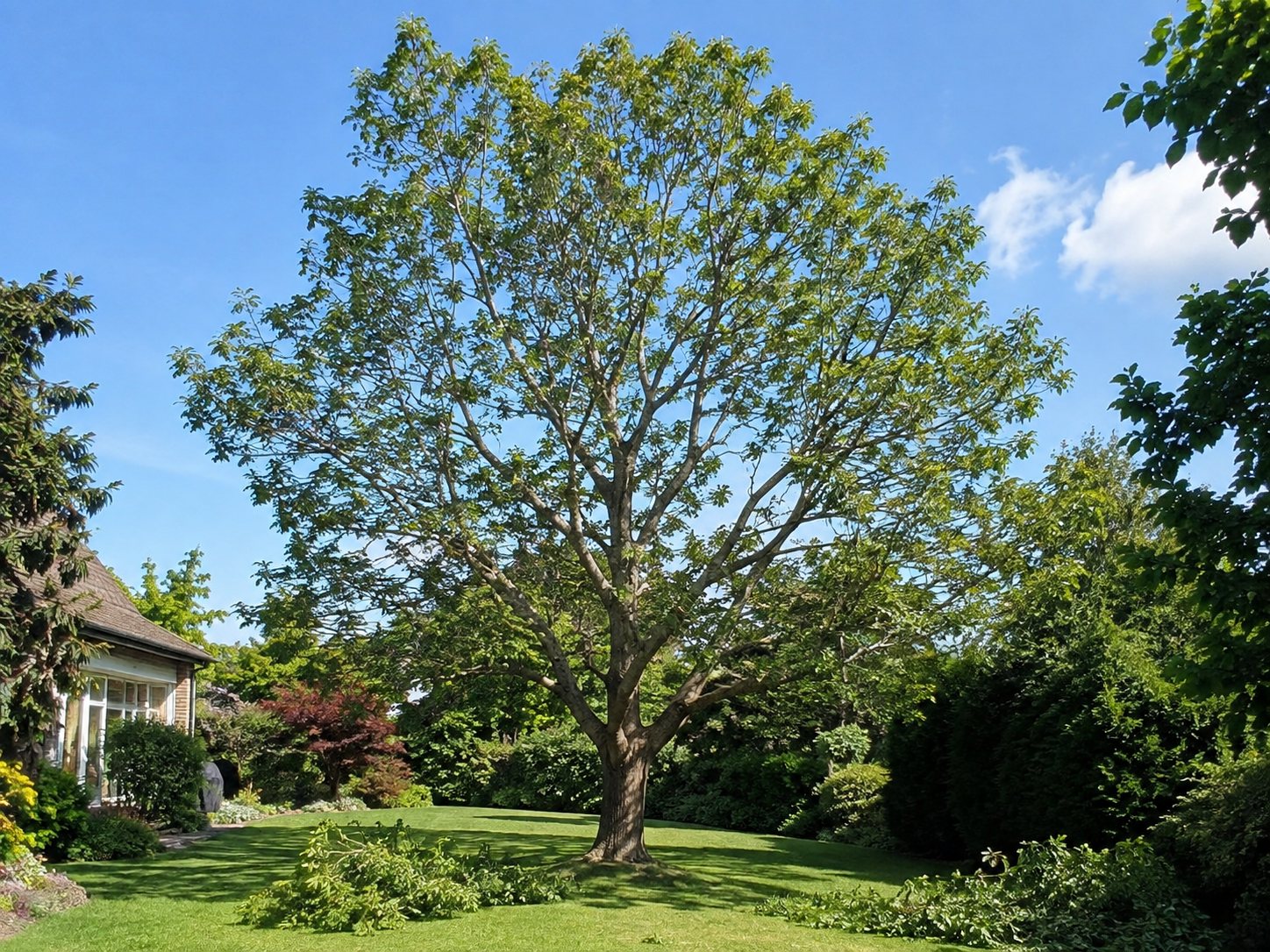
Reducing height and density to ease wind loading, let in light, and keep a mature tree healthy and structurally sound — without changing its natural shape. Fully insured, NPTC-qualified, and carried out to British Standard BS3998.
Crown reduction vs
Thinning
A crown reduction makes a tree smaller overall — cutting back the height and spread while keeping its natural shape. It's the go-to when a tree has simply outgrown its space, is overhanging a building, or needs less weight up top to cope with wind.
Crown thinning doesn't change the size at all. Instead, we selectively remove smaller branches throughout the crown to let more light and air through and ease wind resistance, without altering the tree's overall shape or height.
Plenty of trees benefit from a bit of both, and we'll always tell you honestly which one — or which combination — suits your tree.

What a crown reduction &
thinning actually fixes
It's not just about looks — done properly, both are genuinely protective work.
Less Wind Loading
A dense, overgrown crown catches far more wind than a well-managed one — a leading cause of storm damage and uprooting in mature trees.
More Light & Air
Thinning opens up the canopy so light reaches the lawn, borders and windows beneath it, and increases air flow.
A Tree Kept, Not Lost
Where felling would remove a tree entirely, a crown reduction and thinning keeps it in place — smaller, safer, and manageable for years to come.

Signs your tree
needs attention
A few common reasons people call us for a crown reduction and thinning — if any of these sound familiar, it's worth a free site visit:
-
Grown too large for the garden, or overhanging a building
-
Dense canopy catching too much wind in storms
-
Not enough light reaching the lawn or nearby planting
-
Crown congested with crossing or rubbing branches
-
Needs keeping at a safe, manageable size long-term
From first call
to cleared site
Four steps, every time — no surprises on the day and no mess left behind.
Get in touch
Call, message, or send us a few photos. Tell us what's going on and where you're based.
Free site visit
We come out to assess the tree, access and any council permissions needed, then send a clear, written quote.
The work
Our NPTC-qualified climbers carry out the job safely, with the right rigging and site protection throughout.
Clear & tidy
Site swept, logs or chippings dealt with as agreed, and all waste disposed of responsibly.
A crown reduction & thinning,
questions answered
The things people usually want to know before booking a crown reduction and thinning.
What's the difference between a crown reduction and crown thinning?
A reduction makes a tree smaller overall — cutting back the height and spread while keeping its natural shape. Thinning doesn't change the size at all; it selectively removes smaller branches through the crown to let more light and air through and ease wind resistance. Many trees benefit from a bit of both.
Will a crown reduction and thinning harm the tree or stunt its growth?
Done properly, no. We prune back to a suitable growth point rather than leaving stubs, and we never take more off in one go than the tree can reasonably recover from. A poorly executed crown reduction and thinning can cause problems — which is exactly why it's worth having the work done by someone qualified.
How much can you safely reduce a tree by?
It depends on the species, its condition and how it's been managed before. As a general rule we avoid removing more than around a quarter of the crown in a single visit — if a tree needs taking back further than that, it's often better done gradually over a couple of visits.
Do I need permission to reduce or thin a tree?
Sometimes. Trees within a conservation area, or covered by a Tree Preservation Order (TPO), usually need council permission before work goes ahead — reduction and thinning included. We check this for you as part of the free site visit.
How often does a tree need reducing or thinning?
It varies a lot by species and how fast it grows, but most managed trees are reviewed every two to five years. Fast growers like willow or leylandii may need attention more often to keep them at a manageable size.
Is a crown reduction and thinning cheaper than felling?
Usually, yes, and it keeps the tree rather than removing it entirely. We'll always give you an honest recommendation on which makes more sense for your tree — see our felling page for when removal really is the better option.
Often considered alongside
a crown reduction & thinning
Crown Lifting
Removing lower limbs to raise the canopy — often done alongside a crown reduction and thinning to clear driveways, paths or roof lines.
Learn morePollarding
For trees that need reducing back to the same points year after year, pollarding keeps size permanently under control.
Learn moreTree Felling & Removal
If a tree's beyond what a crown reduction and thinning can safely manage, felling may be the more sensible long-term option.
Learn more