 Sudbury & Surrounding Areas
Dead-Wooding
& Pruning.
Removing dead, diseased or damaged limbs before they become a hazard to people, property or the tree itself. Fully insured, NPTC-qualified, and carried out to British Standard BS3998.
Taking out what's
already gone
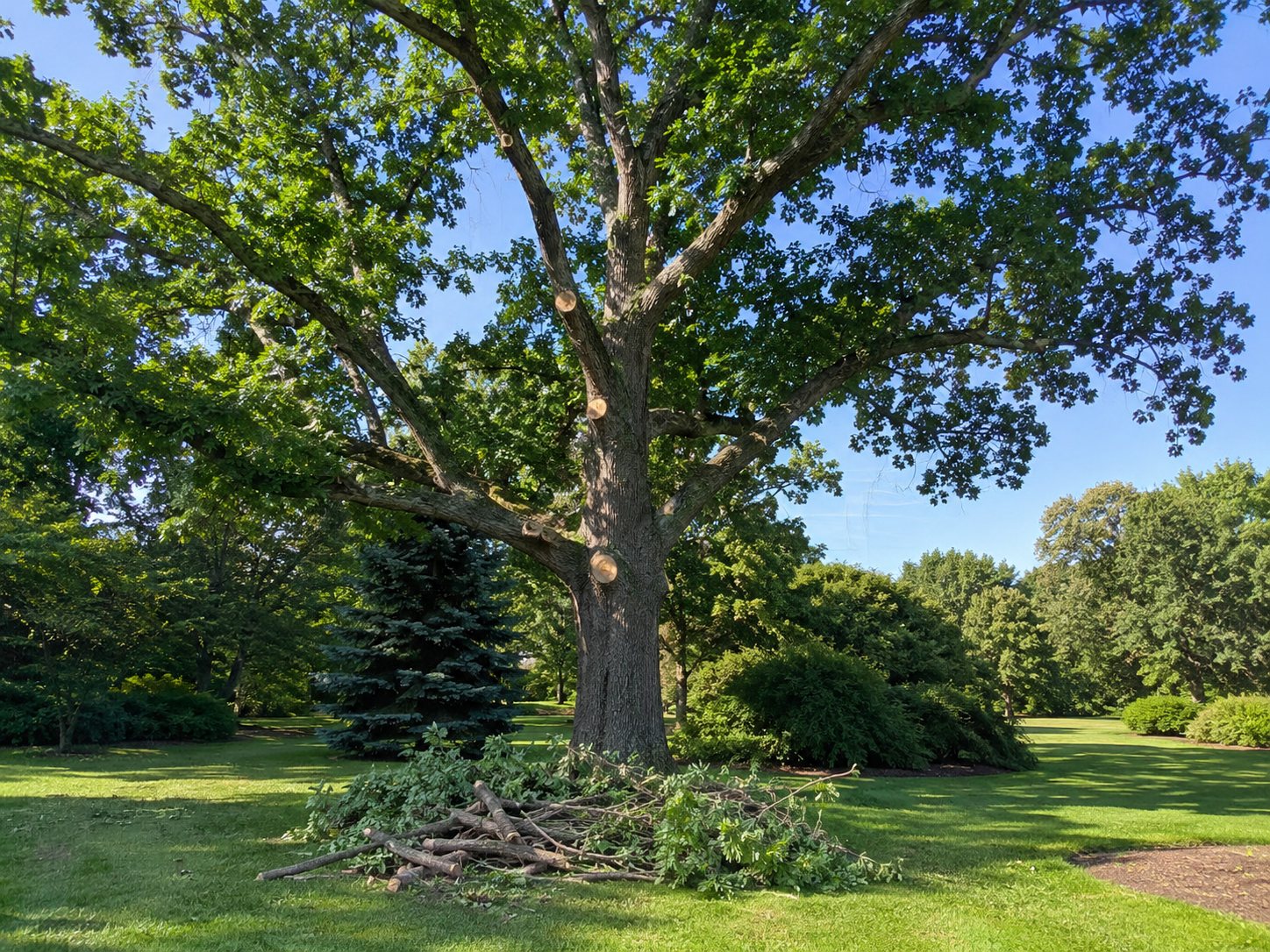
Dead-wooding is exactly what it sounds like — removing dead, dying or damaged branches from an otherwise healthy tree. It's not about reshaping the tree or changing how it looks; it's about taking out the specific limbs that have stopped growing and could fail without warning.
Unlike a living branch, a dead one doesn't bend, flex or give any sign it's about to come down — no creaking, no leaning, nothing to see coming. Over a garden, driveway, path, or anywhere people or cars pass underneath, that.s a serious risk worth dealing with.
We only remove what actually needs to come out. Some deadwood is completely normal, even valuable for wildlife, and we'll always explain what we're taking and why rather than stripping a tree back further than it needs.

Small job, lasting
peace of mind
It's often one of the smaller jobs we do — but it's genuinely protective work.
Removes an Unseen Risk
A dead branch can fail with no warning signs at all — dead-wooding removes that risk before it becomes an incident.
Protects the Rest of the Tree
Dead and diseased wood can be a route for decay or pests to spread into otherwise healthy parts of the tree.
Satisfies Duty of Care
If a tree's on your property and overhangs a path, road or neighbouring garden, keeping it free of hazard deadwood is part of looking after it responsibly.

Signs it's time
for a check
You don't need to be an expert to spot the early signs. If any of these apply, it's worth getting a tree looked at:
-
Bare, brittle branches with no leaves while the rest of the tree's in leaf
-
Bark that's peeling, cracked or missing from a limb
-
Fungal growth on the trunk or major limbs
-
A branch overhanging somewhere people regularly walk, sit or park
-
It's simply been a few years since the tree was last checked over
From first call
to cleared site
Four steps, every time — no surprises on the day and no mess left behind.
Get in touch
Call, message, or send us a few photos. Tell us what's going on and where you're based.
Free site visit
We come out to assess the tree, access and any council permissions needed, then send a clear, written quote.
The work
Our NPTC-qualified climbers carry out the job safely, with the right rigging and site protection throughout.
Clear & tidy
Site swept, logs or chippings dealt with as agreed, and all waste disposed of responsibly.
Dead-wooding,
questions answered
The things people usually want to know before booking a dead-wood check.
What exactly is dead-wooding?
Dead-wooding is the removal of dead, dying or damaged branches from an otherwise healthy tree. It's not about reshaping the tree — it's about taking out the specific limbs that have stopped growing and could fail or drop without warning.
Why can't dead branches just be left alone?
A dead branch doesn't bend or give the way a living one does, and it can fail with no warning — no creaking, no leaning, nothing to see coming. Over a garden, driveway, path or anywhere people or cars pass underneath, that.s a serious risk worth removing before it becomes a problem.
How is dead-wooding different from a crown reduction?
A crown reduction reshapes a tree by cutting back live growth to reduce its overall size. Dead-wooding only removes what's already dead or damaged — the living parts of the tree are left untouched. Many jobs involve a bit of both.
Does a tree with a lot of deadwood need to come down?
Not usually. Some deadwood is completely normal, especially in mature trees, and even provides valuable habitat for insects and birds where it's not a hazard. We only recommend removing what's actually a risk to people or property, and we'll always explain our reasoning rather than just cutting everything back.
How often should a tree be checked for deadwood?
For a tree near a house, driveway or somewhere people regularly are, a check every couple of years is sensible — more often for older or already-declining trees. If you've noticed a specific branch that looks dead, it's worth getting it looked at sooner rather than waiting.
Do I need permission to remove deadwood?
Sometimes. Trees within a conservation area, or covered by a Tree Preservation Order (TPO), can still require council permission even for deadwood removal. We check this for you as part of the free site visit.
Often considered
alongside dead-wooding
Crown Reduction & Thinning
Often carried out at the same time as a dead-wood, if the tree also needs a reshape or thin.
Learn moreTree Felling & Removal
If a tree's declined beyond what dead-wooding can safely manage, removal may be the more sensible option.
Learn moreCrown Lifting
Lower dead or obstructive branches can be removed while raising the canopy to create safer clearance beneath the tree.
Learn more