 Sudbury & Surrounding Areas
Pollarding.
Regular, scheduled reduction that keeps large trees permanently sized down — ideal for gardens, roadsides and boundary lines. Fully insured, NPTC-qualified, and carried out to British Standard BS3998.
Cut to the same
points, every time
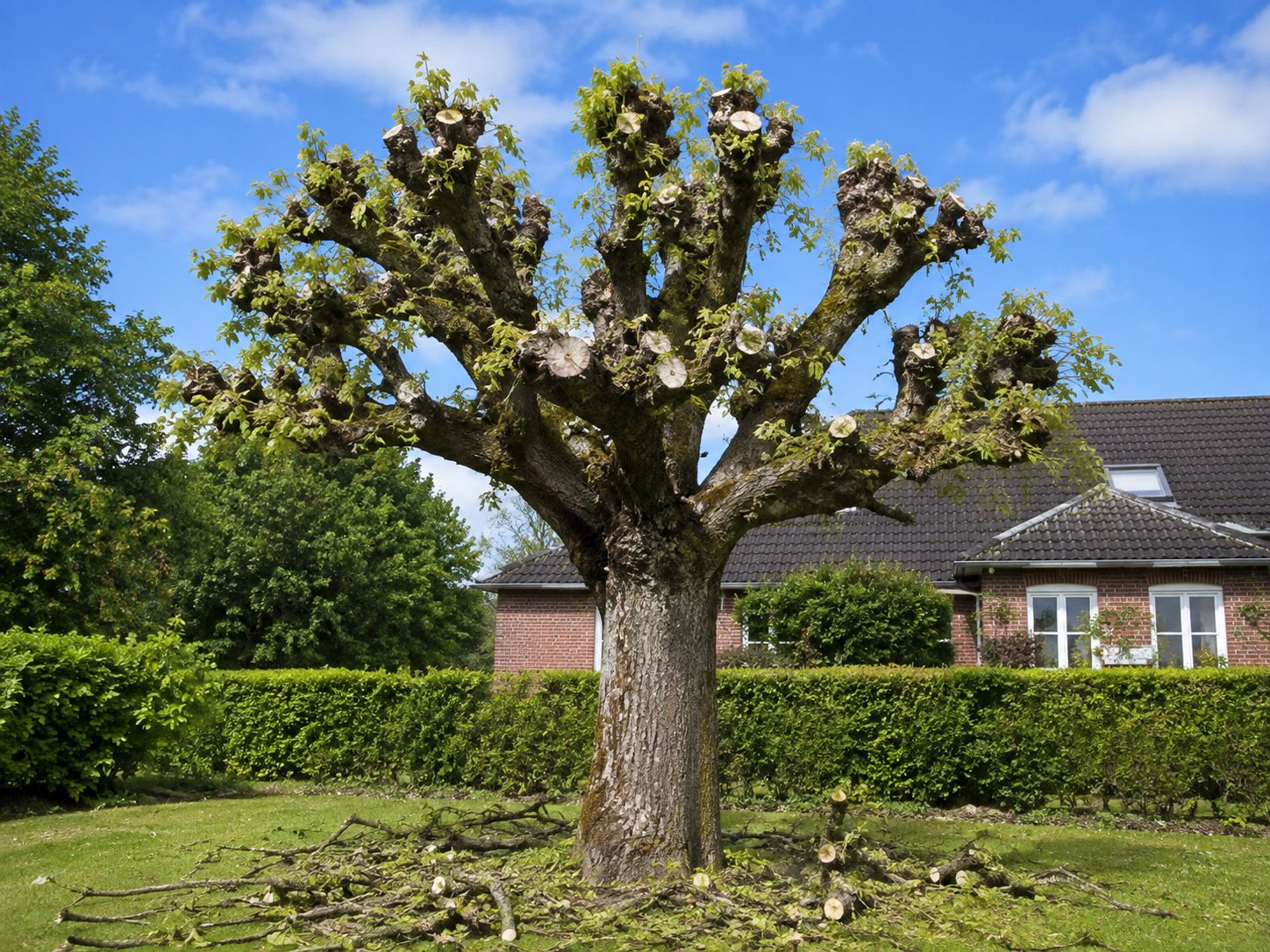
Pollarding is a pruning technique that cuts a tree back to the same fixed pruning points every time it's done. Rather than a one-off reshape, it's a repeated cycle: each time we cut back to those same pruning points, the tree regrows a predictable crown of new shoots, kept at a manageable size.
Once a tree's established on a pollard cycle, it stays that way for life. It's a genuinely old technique — some pollarded trees in the UK are hundreds of years old — and when it's kept up properly, it's one of the most effective ways to keep a large tree permanently sized down without ever removing it.
It suits species that regrow readily from cut points — willow, lime, plane and sycamore are common candidates. We'll always tell you honestly whether your tree's a good fit before recommending it.
What a pollard
cycle actually gives you
Pollarding is a commitment, not a quick fix — but it pays off in a few concrete ways.
Permanent Size Control
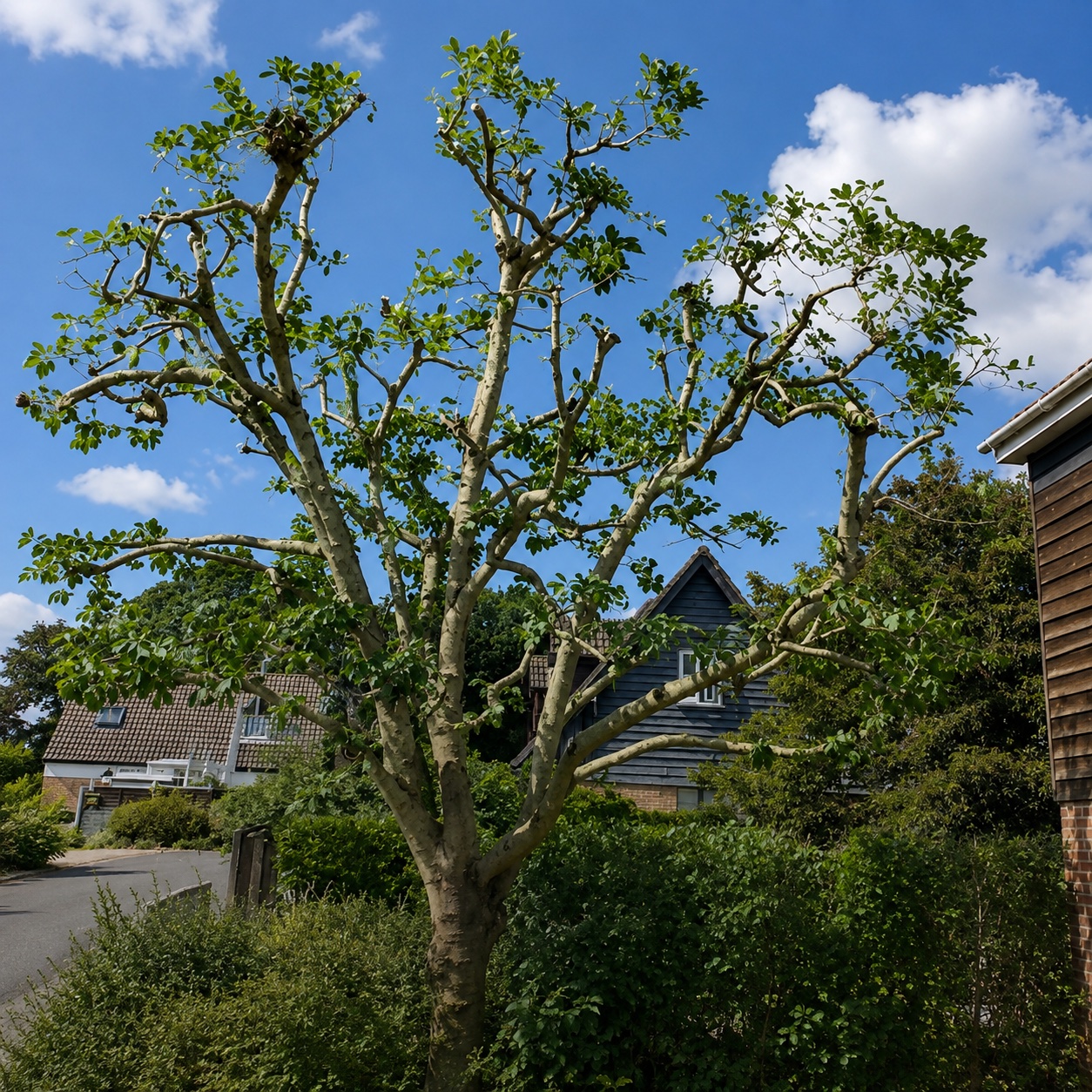
Once established, a pollarded tree stays roughly the same size cycle after cycle, rather than needing an ever-bigger cutback each time.
A Tree Kept, Not Lost
A well-managed pollard can stay in place indefinitely — an alternative to felling for trees that have simply outgrown their spot.
Predictable, Manageable Growth
Ideal near roads, boundaries and overhead lines, where a tree's size and shape need to stay reliably within bounds year after year.

When pollarding
makes sense
Pollarding isn't the right call for every tree — but for the right one, it's genuinely one of the best long-term options. Common reasons people choose it:
-
A fast-growing species that would otherwise need cutting back constantly
-
Growing near overhead lines, roads or boundaries with a strict height limit
-
Already pollarded in the past and due its next cycle
-
A species that responds well to it — willow, lime, plane and sycamore are common candidates
-
You want the tree kept, not removed, but it can't keep growing unmanaged
From first call
to cleared site
Four steps, every time — no surprises on the day and no mess left behind.
Get in touch
Call, message, or send us a few photos. Tell us what's going on and where you're based.
Free site visit
We come out to assess the tree, access and any council permissions needed, then send a clear, written quote.
The work
Our NPTC-qualified climbers carry out the job safely, with the right rigging and site protection throughout.
Clear & tidy
Site swept, logs or chippings dealt with as agreed, and all waste disposed of responsibly.
Pollarding,
questions answered
The things people usually want to know before starting a pollard cycle.
What is pollarding, and how is it different from a crown reduction?
Pollarding cuts a tree back to the same fixed pruning points every time, so it regrows a predictable shape and stays the same manageable size long-term. A crown reduction is a one-off cutback to a natural shape without fixed points. Pollarding is really a repeated, scheduled programme rather than a single job.
Does pollarding harm the tree?
Not when it's kept up. Pollarding is a genuinely old, well-established management technique — some pollarded trees are centuries old. The key is starting it while a tree's young enough to take it well and then sticking to a regular cycle; stopping halfway or starting on the wrong tree is where problems come from.
How often does a pollarded tree need re-cutting?
Typically every two to five years, depending on the species and how fast it regrows. Once a tree's on a pollard cycle, it's worth sticking to it — leaving it too long lets the regrowth get heavy and adds unnecessary weight back onto the pruning points.
Can any tree be pollarded?
No — it suits species that regrow readily from cut points, like willow, lime, plane and sycamore. Pollarding an unsuitable species, or starting it on a tree that's already mature and never been pollarded before, can do more harm than good. We'll always tell you honestly if it's the right fit.
Do I need permission to pollard a tree?
Sometimes. Trees within a conservation area, or covered by a Tree Preservation Order (TPO), usually need council permission before work goes ahead. We check this for you as part of the free site visit.
Will the tree look bare after pollarding?
Yes, for a little while — a freshly pollarded tree looks stark until the new growth comes through, usually within a season. It's a normal, expected part of the cycle rather than a sign anything's gone wrong.
Often considered
alongside pollarding
Crown Reduction & Thinning
For a one-off reshape rather than a repeated cycle, reduction keeps a tree's natural form while bringing it back to size.
Learn moreCrown Lifting
Raising the canopy for clearance over a path or driveway — sometimes done alongside a pollard, sometimes on its own.
Learn moreTree Felling & Removal
If a tree isn't a good fit for pollarding and can't be safely managed another way, removal may be the better long-term call.
Learn more